Meet the 'Real' You: Why Millions of Americans Are Living Double Lives Online
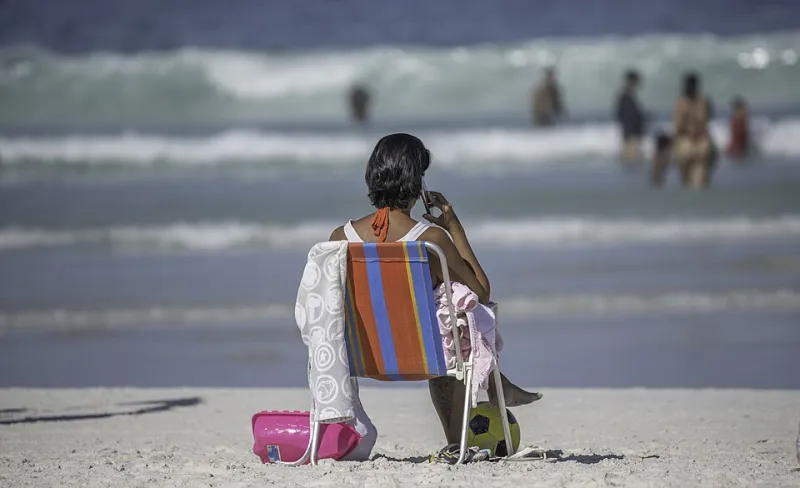
Photo: Wilfredor, CC0, via Wikimedia Commons
Picture this: your main social media profile is polished, professional, maybe a little carefully curated. You share the hot take that's safe enough. You like the post your coworker tagged you in. You keep it civil in the comments because, well, people know you there.
Then there's the other account.
Maybe it's a burner Twitter — sorry, X — handle with a cartoon avatar. Maybe it's a Reddit profile with a username that sounds like a keyboard smash. Whatever the format, you know what it's for: saying the stuff your main account wouldn't dare touch.
If any of that sounds familiar, you're in very good company. The phenomenon of the "alt account" or anonymous secondary profile has quietly become one of the defining behaviors of modern online life in the US — and it says a lot more about us than we might want to admit.
The Alt Account Isn't New — But It's Everywhere Now
Anonymous online spaces are basically as old as the internet itself. Anyone who hung around AOL chat rooms or early message boards knows that going by a pseudonym was just... the default. Your real name wasn't the point. Your ideas were.
But something shifted as social media matured. Platforms like Facebook pushed hard for "real identity" policies. LinkedIn turned professional reputation into a social currency. Instagram made personal branding a part-time job for regular people. Suddenly, your name was attached to everything you said online — and the stakes of saying the wrong thing went way up.
So people adapted. They didn't stop having messy, complicated, or controversial opinions. They just... moved them somewhere else. According to a Pew Research study, a significant portion of American social media users maintain more than one profile across platforms, with a notable subset specifically using secondary accounts to engage in conversations they'd avoid on their primary profiles. The reasons range from privacy concerns to professional protection to something much simpler: not wanting the drama.
The Psychology of Splitting Your Digital Self
Psychologists have a term for presenting different versions of yourself in different social contexts: self-monitoring. We all do it offline — you talk differently with your boss than you do with your best friend, and that's not hypocrisy, that's just being a functional human being.
Online, though, the stakes feel different because the audiences can overlap in unpredictable ways. One poorly timed tweet can get screenshotted and sent to your employer. A Reddit comment made in a niche community can get surfaced and weaponized. The internet has a long memory and a short fuse, and people have learned — sometimes the hard way — that expressing certain opinions under your real name carries real-world consequences.
So the alt account becomes a kind of psychological pressure valve. It's where you go to be the version of yourself that your LinkedIn profile can't afford to be. And here's the uncomfortable truth: for a lot of people, that is the more authentic version. The careful, brand-managed main account is the performance. The anonymous one is the journal.
Does Anonymity Actually Free Your Voice — Or Just Remove the Guardrails?
This is where things get genuinely complicated, and it's worth sitting with the tension rather than rushing to a verdict.
On one hand, pseudonymous spaces have historically been where some of the most important conversations happen. Survivors of trauma, people questioning their identity, whistleblowers, political dissidents — these aren't abstract categories. These are real Americans who have used anonymous accounts to say things that would have been dangerous or deeply personal to attach to their real names. The ability to speak without immediate social consequence has real value.
On the other hand, anonymity has a well-documented shadow side. Remove accountability and some people don't find their authentic voice — they find their worst one. The harassment campaigns, the pile-ons, the coordinated cruelty that shows up in comment sections and DMs — a lot of that gets laundered through accounts with no real identity attached. When there's no face behind the words, some people feel licensed to say things they'd never own in person.
So which is it? Liberation or license? The honest answer is probably: both, depending on the person and the platform.
What This Means for Communities Built Around Sharing Opinions
For platforms designed around genuine dialogue — places where the whole point is to exchange perspectives, build on each other's ideas, and actually talk — the alt account phenomenon creates a real design challenge.
If your most honest users are your most anonymous ones, how do you build a community that captures that authenticity without becoming a free-for-all? How do you create space for the opinion someone's too nervous to say under their real name, while still maintaining the kind of accountability that makes a conversation worth having?
Some platforms have leaned into pseudonymity from the start — Reddit being the obvious example, where your username is your identity and nobody needs to know if you're a 45-year-old accountant from Ohio or a college sophomore in Austin. That model has produced some genuinely remarkable communities alongside some genuinely awful ones, which kind of proves the point about anonymity cutting both ways.
Others have experimented with "reputation within the platform" systems — where you might be anonymous to the outside world but your history within a community still follows you. That's an interesting middle ground: you don't have to be publicly accountable, but you're still accountable to the community you're actually participating in.
The Question Worth Asking Yourself
Here's a thought experiment: if you have an alt account, or if you've ever wanted one, ask yourself what you'd actually use it to say. Is it something you genuinely believe but fear judgment for? Is it something you'd say to a trusted friend but not to an algorithm-sorted audience? Or is it something you know, on some level, you shouldn't be saying at all?
That distinction matters. The first two cases suggest the problem isn't really with you — it's with the environment. When people feel like they can't be honest in spaces that are supposed to be about sharing perspectives, that's a failure of platform design and community culture, not a personal flaw.
The third case is where anonymity stops being a tool for authentic expression and starts being a way to escape the natural consequences of saying something harmful.
Most of us, if we're being real, have opinions that fall into that first or second category — things we believe genuinely but have learned to swallow because the social cost felt too high. That's not a character flaw. It's a pretty rational response to how online spaces have evolved.
The Bigger Picture
The alt account isn't going away. If anything, as the real-world consequences of online speech continue to escalate — job losses, relationship fallouts, public pile-ons — more people are going to find ways to protect their primary identity while still finding somewhere to actually say what they think.
What that means for the future of online community is genuinely an open question. But it starts with acknowledging something that the polished, real-name internet has been reluctant to admit: for a lot of people, the anonymous account isn't the fake one.
It might be the most real thing about them online.