Thinking Out Loud — Just Not Where Anyone Can See It
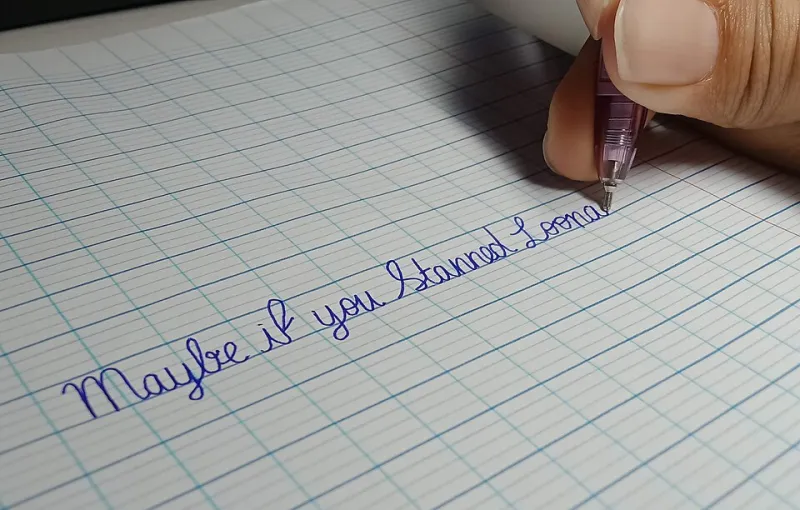
Photo: Jiafei Slay Queen, CC0, via Wikimedia Commons
There's a version of you that never posts. Never quote-tweets. Never drops a hot take into a comment section and refreshes nervously for the next hour. That version of you exists in a Notes app, a password-locked journal, or a private diary platform — and apparently, that version is getting a lot more popular.
Private journaling apps like Day One, Reflectly, and Notion's personal workspaces have seen steady user growth over the past couple of years. Encrypted note-taking tools like Standard Notes and even Apple's locked notes feature are being used not just for grocery lists, but for the kind of raw, unfiltered opinion-sharing that used to live on blogs and early social media. People are writing their actual thoughts down — they're just not sharing them with anyone.
So what happened? And what does it mean for a platform like OpinioApp, which is literally built on the idea that your voice deserves to be heard?
The Public Feed Became a Courtroom
Ask anyone who's been online for more than five minutes, and they'll tell you: posting an opinion in public doesn't feel like starting a conversation anymore. It feels like presenting evidence at a trial where the jury has already made up its mind.
The fear isn't just about being wrong. It's about being screenshotted. It's about a two-year-old post resurfacing at the worst possible moment. It's about spending your whole day defending a three-sentence take to people who were never really interested in your reasoning to begin with. For a lot of Americans — especially millennials and Gen Z, who grew up watching public call-outs become a sport — the risk-to-reward math on public sharing has quietly shifted.
When posting starts to feel like legal testimony, people stop talking. Or they start talking somewhere safer.
The Rise of the Private Opinion Vault
Here's what's interesting about the journaling app trend: it's not that people have fewer opinions. If anything, the world keeps handing us more things to react to — politics, pop culture, workplace drama, family dynamics, the endless scroll of things that are somehow both outrageous and exhausting. People are full of thoughts.
They're just storing them differently.
Private journaling gives you all the cognitive benefits of articulating an opinion — organizing your thinking, processing emotion, working through a complicated reaction — without the social cost of publishing it. You get to be honest with yourself without performing for an audience. And for a lot of people, that turns out to be genuinely more satisfying than getting 12 likes and two snarky replies.
Mental health professionals have been recommending expressive writing for decades. What's new is that the apps have gotten good enough — and the public internet has gotten hostile enough — that a real behavioral shift is happening. People are choosing the journal over the feed, not just occasionally, but as a default.
What You Don't Say Still Shapes You
Here's where it gets a little complicated, though. There's a meaningful difference between processing your opinions privately and never engaging with outside perspectives at all.
One of the things that makes opinion-sharing in community spaces valuable — even messy, even uncomfortable — is that your ideas get stress-tested. Someone pushes back. You reconsider. You either sharpen your argument or you realize you were wrong about something. That friction is annoying in the moment, but it's also how thinking actually evolves.
A private journal is a monologue. A great one, maybe. Cathartic, clarifying, completely yours. But it doesn't talk back. And if the only place you're fully honest is in a locked app on your phone, you might be getting really good at articulating thoughts that never have to survive contact with reality.
There's a version of this trend that's genuinely healthy — people setting boundaries, protecting their mental energy, choosing their battles. And then there's a version that's more like intellectual hermitage, where the comfort of total privacy starts to replace the harder, messier work of actual dialogue.
The Trust Problem Nobody Wants to Talk About
Underneath all of this is a trust issue. People don't just distrust other users — they distrust the platforms themselves. Data privacy concerns, algorithmic manipulation, the sense that what you post is being used to profile and target you — these aren't paranoid theories anymore. They're documented realities that have made a lot of Americans genuinely wary of what they put in writing anywhere public.
Encrypted, offline-first journaling apps have capitalized on exactly this anxiety. Their pitch is simple: your thoughts belong to you. No ads. No data harvesting. No algorithm deciding who sees what you wrote. For people who've watched their social media history weaponized or their engagement metrics turned into someone else's revenue, that pitch lands hard.
The irony is that this is happening at the same moment that platforms built around authentic community — places designed specifically to make sharing feel safer and more meaningful — are trying to offer a genuine alternative to the chaos of mainstream social media. The question is whether trust, once broken by the big platforms, can be rebuilt anywhere online at all.
What This Means for Where Opinions Actually Live
If people are retreating to private vaults, the public conversation doesn't get quieter — it just gets less representative. The voices that stay loud in public spaces tend to be the ones with the least to lose, or the most to gain from the attention. The more thoughtful, nuanced takes? Those are increasingly going into a locked Notes folder that nobody will ever read.
That's a real loss, even if the people choosing privacy are making a completely understandable decision.
The future of online discourse probably isn't a choice between screaming into the void or keeping everything locked away. It's about finding spaces that are genuinely designed for something in between — communities where you can share a real opinion without it feeling like a gamble, where disagreement doesn't automatically mean pile-on, and where the goal is actual exchange rather than performance.
Your vault is yours. But at some point, the best ideas deserve a little air.