Swallowing Your Take: What Happens to Communities When Everyone Plays It Safe

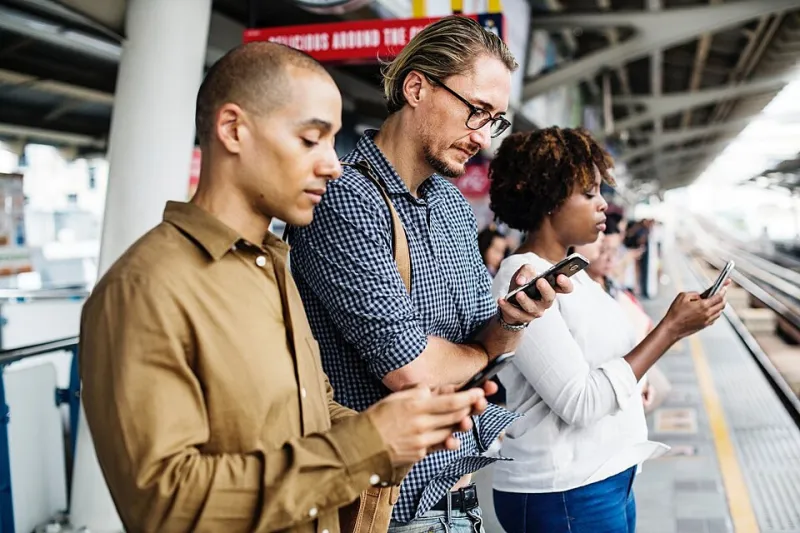
Photo by Photo by Vitaly Gariev on Unsplash on Unsplash
You've been there. You're scrolling through a thread, reading takes that feel a little too tidy, a little too unanimous. You've got something different to say — maybe even something true — and you start typing. Then you stop. You imagine the replies. The quote-tweets. The pile-on. So you close the tab, maybe pour another coffee, and move on like the thought never existed.
That moment? It happens millions of times a day across every platform, subreddit, group chat, and comment section in America. And while it might feel like a small, personal decision, the cumulative effect of all those deleted drafts is doing something serious to the way we build community online.
The Spiral Nobody Talks About
Social scientists have a name for the phenomenon where people silence themselves because they assume they're in the minority: the spiral of silence. The theory, developed decades ago by German political scientist Elisabeth Noelle-Neumann, basically says that the louder a viewpoint gets, the more people with opposing views go quiet — not because they've changed their minds, but because they're afraid of social isolation.
That was the 1970s. Now imagine that same dynamic turbocharged by algorithms that amplify outrage, communities that reward conformity with likes, and a cancel-culture conversation that — regardless of where you fall politically — has made a lot of people genuinely nervous about saying the wrong thing at the wrong time.
The result isn't a healthier public square. It's a noisier one dominated by whoever is least afraid.
Fear Doesn't Just Silence — It Distorts
Here's the part that gets underappreciated: self-censorship doesn't just remove your opinion from the conversation. It actively warps everyone else's perception of what people actually believe.
When only the boldest or most extreme voices show up consistently, the rest of us start to think those voices represent the majority. We calibrate our sense of "normal" to a sample that was never representative to begin with. On a platform like OpinioApp, where the whole point is hearing your community's real take on things, that distortion is especially costly. A thread where everyone agrees might look like consensus — but it might just be a room full of people who were too nervous to push back.
This matters in small communities just as much as big ones. Your local neighborhood Facebook group. A subreddit for fans of a niche TV show. A Discord server built around a shared hobby. The pressure to conform doesn't need a million followers to do damage — it just needs a few loud regulars and a culture where dissent feels risky.
Why We Do It (And It's Not Just About Being "Sensitive")
It's tempting to frame self-censorship as a personality flaw — something introverts or conflict-avoiders do. But research suggests it's a near-universal behavior triggered by pretty rational threat assessments.
People weigh the social cost of speaking up against the benefit of being heard. When communities are built around strong in-group identities — political, cultural, fandom-based — the cost of breaking with the group can feel existential. You're not just risking a bad reply. You're risking your belonging.
And belonging, as any psychologist will tell you, is not a luxury. It's a core human need. So when someone decides their unpopular opinion isn't worth the potential fallout, they're not being weak. They're being human.
The problem is that when everyone makes that calculation simultaneously, the community loses the very thing that makes it worth belonging to: honesty.
The Authenticity Deficit
There's a term floating around UX and community design circles: psychological safety. It refers to the sense that you can speak up, take risks, and be wrong without getting punished for it. In workplaces, psychological safety has been linked to better team performance and more creative problem-solving. In online communities, it's the difference between a place where ideas actually develop and a place where everyone's just performing agreement.
The communities that tend to feel most alive — the ones people actually come back to, recommend to friends, and genuinely invest in — are usually the ones where someone set a tone early on that made honest disagreement feel okay. Not comfortable, necessarily. But survivable. Even interesting.
That's a harder thing to build than it sounds. It requires moderators who don't just shut down conflict but facilitate it. It requires members who can take a contrary opinion as an invitation to think rather than an attack to deflect. And it requires platforms that don't algorithmically reward the hottest take at the expense of the most thoughtful one.
What You're Actually Losing When You Don't Post
Let's get personal for a second. When you swallow that opinion — the one that felt a little risky, a little outside the consensus — what's the actual cost?
Maybe nothing, in the short term. But over time, self-censorship has a way of compounding. You start to lose the habit of articulating your real views, even to yourself. You get better at predicting what a room wants to hear and worse at figuring out what you actually think. Some researchers have linked chronic self-silencing to increased anxiety and a diminished sense of personal identity. Which is a heavy price to pay for avoiding a few bad replies.
And from the community's side? It loses the diversity of thought that keeps conversations from going stale. The unconventional take you were too scared to share might have been exactly the thing that shifted someone else's perspective — or at least made them think twice. That's not nothing. In a healthy community, that's kind of the whole point.
So What Now?
Nobody's saying you should post every raw, half-formed thought you have into the void. Discretion and self-censorship aren't the same thing. But there's a meaningful difference between choosing not to say something because the timing is off or the thought isn't ready, and suppressing something because you're afraid of how it'll land.
If you're building or moderating a community — whether it's a group on OpinioApp, a subreddit, or a neighborhood Slack — the most valuable thing you can do is make it genuinely safe to disagree. Not by eliminating standards or tolerating bad-faith arguments, but by modeling the kind of engagement where a contrary view is treated as a contribution, not a threat.
And if you're just a member of a community, trying to figure out whether to post that thing you've been sitting on? Consider that the version of your community you want to exist — the one where real conversations happen — only gets built if enough people decide to show up honestly.
Your take matters. Even the scary one. Especially the scary one.